The Cruciform Mystery of Human Freedom in the Patristic Tradition
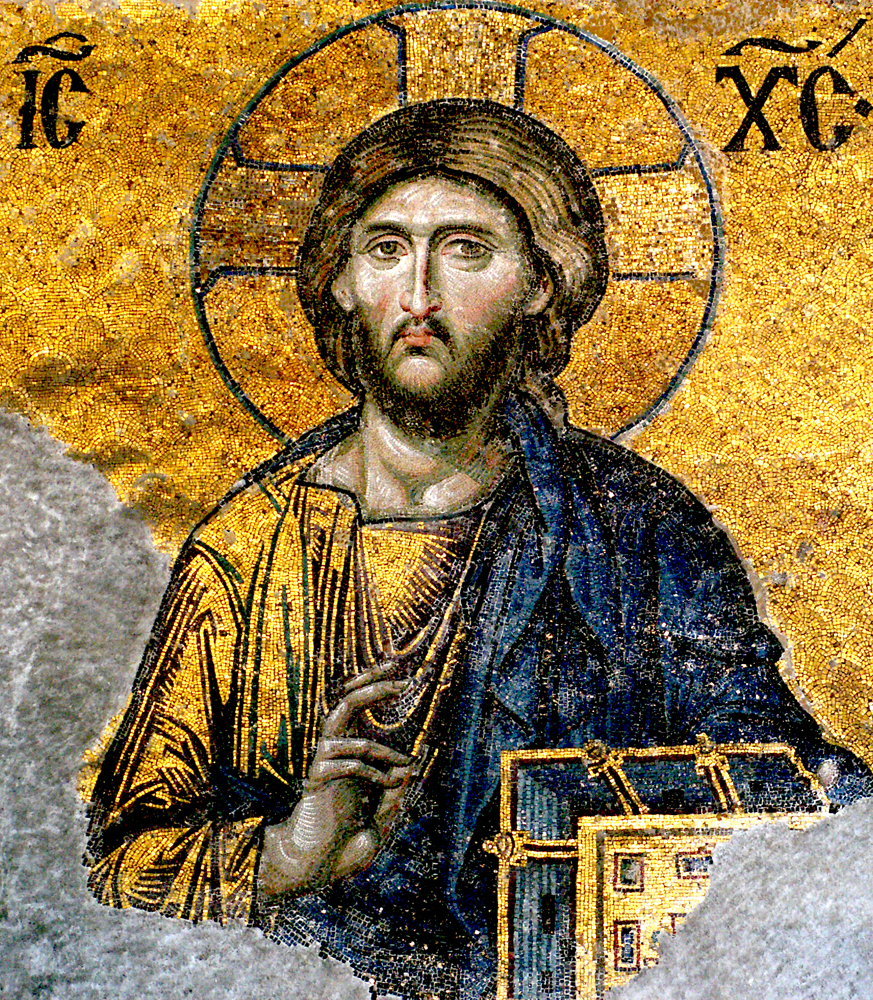
“The Cruciform Mystery of Human Freedom in the Patristic Tradition”
By Stavroforemonk Symeon Agiomicheltítēs
“It was for freedom that Christ set us free; stand firm then, and do not let yourselves be burdened again by a yoke of slavery” (Galatians 5:1).
Introduction: Freedom in the Age of Grace
In the Orthodox Patristic tradition, freedom (ἐλευθερία — eleuthería) is not defined merely as the capacity to choose between alternatives, nor is it reducible to self-determination in a modern liberal or voluntarist sense. Rather, freedom is an ontological capacity given by God, rooted in the imago Dei, that enables the human person to respond in love and enter into communion with God. Freedom, for the Fathers, is not an end in itself—it is teleological, ordered toward the fulfillment of the person’s being in theosis (θέωσις — théōsis), union with God.
In the context of Baptism, Chrismation, and the Mystery of Repentance, freedom is both affirmed and transfigured. Though the baptized person has died and risen in Christ, they remain free—capable of rejecting grace, falling into sin, or returning in repentance. This freedom is not abolished by divine grace; rather, grace heals, elevates, and restores it to its original orientation: toward God and love for the Other.
I. Created for Freedom: The Ontological Gift
According to St. Gregory of Nyssa, freedom is what distinguishes man from irrational creatures:
“Being made in the image of God, man possesses freedom of the will, just as God is free” (On the Making of Man, ch. 16).
This is not merely a functional attribute but an ontological dignity: the person is capable of self-movement toward the Good, not by coercion but by love. The Fathers often call this authorship of the self through love a reflection of divine likeness. For St. Maximus the Confessor, true freedom (ἐλευθερία ἀληθινή — eleuthería alēthinḗ) is not the power to choose evil, but the liberation from the tyranny of the passions in order to choose God:
“Freedom consists not in being able to do what one wants, but in being able to will what is good according to nature, without constraint from the passions” (Ambigua, PG 91).
Thus, freedom is not only natural but logocentric—oriented to the Logos, Christ, who is the telos of all rational creatures. The ability to sin, while real, is not the expression of freedom’s fullness but its wounding.
II. The Fall and the Bondage of Freedom
Freedom, after the fall of Adam, became distorted. What had once been the unhindered capacity to love God became a battlefield of inner contradiction. As St. Paul laments:
“I do not understand what I do. For what I want to do I do not do, but what I hate I do… Who will rescue me from this body of death?” (Rom. 7:15, 24).
Sin enslaves the will. Man becomes incapable of choosing the good without divine grace. In this condition, what appears to be freedom is often a delusion of autonomy—a slavery to self, sin, and death.
St. Anthony the Great observes:
“It is not a great thing for a man to do his own will. But it is a great thing to submit one's will to God.” (Sayings of the Desert Fathers, Apophthegmata, Antony 3)
True freedom, then, is not found in the assertion of self-will (αὐτεξουσίᾳ — autexousía), but in obedient synergy with divine grace. The paradox of freedom in the Fathers is that it is fulfilled not in autonomy but in kenosis—self-emptying love.
III. Christ the Liberator: The Reorientation of the Will
Christ, the New Adam, recapitulates human freedom by offering perfect obedience to the Father. His voluntary Passion is the supreme expression of freedom-as-love:
“No one takes it from me, but I lay it down of my own accord” (John 10:18).
By His life, death, and resurrection, Christ not only reconciles us to the Father, but restores freedom to its original orientation. St. Cyril of Alexandria says:
“Christ healed the will, not by destroying it, but by redirecting it to the good… He shows us that true freedom lies in obedience to God” (Commentary on John, Book 8).
The baptized are thus not made into automatons; they are made into lovers, free sons of God. As St. John Chrysostom affirms:
“God does not coerce, but invites. He crowns those who choose Him freely, for virtue requires free choice” (Homily on Romans, 3).
IV. The Freedom to Sin and the Mercy to Return
Though Baptism and Chrismation reconstitute the soul, freedom remains intact. The human person may still sin—may still misuse their liberty. This is the sobering consequence of being made in the image of a free God. The Patristic tradition, however, insists that this capacity for error is the precondition for love. Without freedom, there is no virtue, no repentance, no true communion.
St. Ephrem the Syrian writes:
“God created man free so that he might love freely… If love were compelled, it would not be love” (Hymns on Paradise, Hymn 12).
The Mystery of Confession thus becomes the arena of freedom's restoration: a voluntary return, a sorrowful turning back to the Father's embrace. The Prodigal Son returns not under compulsion, but in the exercise of restored desire.
V. The Eschatological Fulfillment of Freedom
In the Kingdom, freedom will be consummated in love. There will be no possibility of sin, not because freedom is abolished, but because it will be so perfectly united to the Good that the will cannot deviate. As St. Maximus writes:
“When the mind has put off the old man and is clothed in the grace of the Spirit, it will desire only what God wills… and in this it finds its freedom and peace” (Questions to Thalassius, 61).
Freedom, then, is ultimately Christoform—it reaches its perfection in union with the will of Christ, who is the archetype of every human hypostasis. In the age to come, the saints are not less free but infinitely free, because they are infinitely united to the Source of all good.
Conclusion: A Freedom That Crucifies Self-Love
Orthodox freedom is not libertinism. It is not the power to do as one pleases, but the power to become who one truly is—a lover of God, an image of Christ, a co-worker of the Kingdom. It is fulfilled not in self-assertion, but in self-offering.
The Cross is the paradoxical icon of freedom: in it, Christ dies by choice, and through it, we are liberated to become sons in the Son.
“O Christ, Thou who alone lovest mankind, grant us to use our freedom to seek Thee. Teach our wandering hearts to return. In Thee is perfect liberty. In Thee is the freedom of love. Amen.”


Comments
Post a Comment